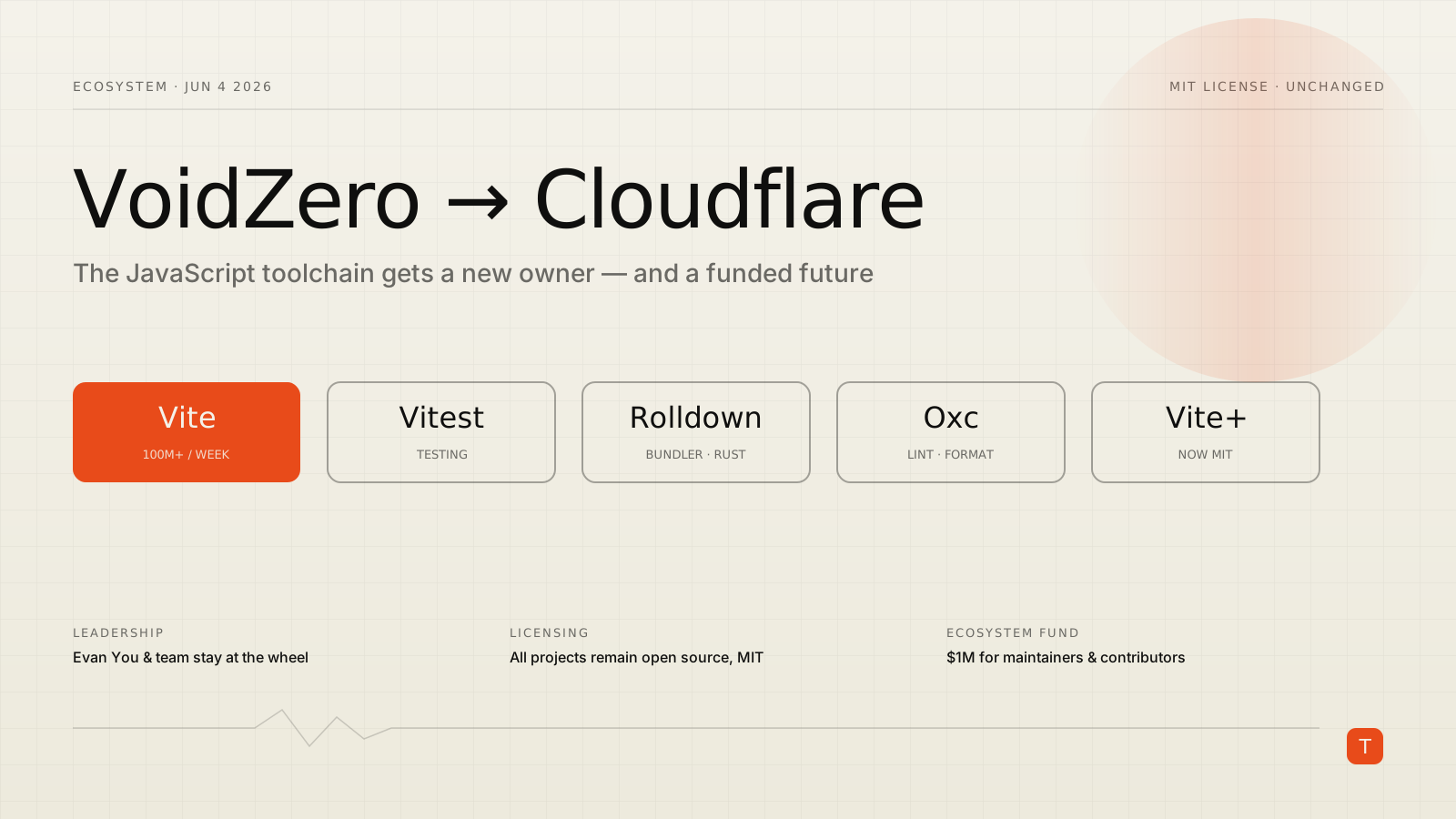
On June 4, 2026, Cloudflare announced it has acquired VoidZero, the company Evan You founded in 2023 to build a unified, Rust-powered toolchain for JavaScript. If you ship anything on the modern web, this deal touches your build pipeline whether you noticed it or not: VoidZero maintains Vite, Vitest, Rolldown, Oxc, Oxlint, Oxfmt, and Vite+ — and by Evan You's own announcement, Vite alone is downloaded more than 100 million times a week.
The headline commitments are clear. All of the projects remain open source under the MIT license. Evan You and the VoidZero team continue to lead them. And Cloudflare is putting $1 million into a Vite ecosystem fund for maintainers and contributors, administered by the Vite core team — not by Cloudflare.
So nothing changes? Not quite. Infrastructure acquisitions are never neutral events, even when the new owner behaves well. Here is the situation as we read it, and what it means for teams that build on this stack.
How VoidZero got here
The acquisition makes more sense once you see the business problem behind it. VoidZero raised venture capital to fund a full-time team building open-source tooling — and in two and a half years, that team delivered. Rolldown 1.0, the Rust bundler with Rollup API compatibility, shipped in May and is now the default bundler in Vite 8. Oxlint runs 50–100x faster than ESLint on large projects, with type-aware rules powered by tsgo. Oxfmt is Prettier-compatible at roughly 30x the speed. Vite+, the unified toolchain wrapping all of it, went MIT-licensed in March after VoidZero abandoned an experiment with mixed commercial licensing.
That last item is the tell. As Evan put it in the announcement, VoidZero hadn't solved monetization: selling licenses for developer tooling "didn't feel right," so the team pivoted to building Void, a Vite-native deployment platform — on top of Cloudflare. At that point the two companies were already deeply entangled: the Vite Environment API was designed in collaboration with Cloudflare, whose Vite plugin runs your server code inside the actual Workers runtime during local dev. Cloudflare buying the team is the logical endpoint of a partnership that already existed.
It is also a familiar pattern. The sponsorship model that sustained Vue for a decade does not scale to a team of full-time systems engineers rewriting the JavaScript toolchain in Rust. The realistic outcomes for a company like VoidZero were a successful platform business, a slow decline, or acquisition by someone whose platform benefits from the tooling being excellent and free. Of the three, this is arguably the best one for users.
What's genuinely good here
A few things in this deal are better than the average open-source acquisition.
The tools were already vendor-neutral, and the incentive structure keeps them that way. Vite's value to Cloudflare is precisely that everyone uses it — including teams deploying to Vercel, Netlify, AWS, or their own servers. A Vite that only worked well on Cloudflare would stop being the default scaffold for every framework, which would destroy the asset Cloudflare just paid for. The press release leans hard on this point, and the vendor-agnostic pledge is repeated in both announcements.
Continuity of leadership matters more than license promises. MIT licensing means the code can always be forked, but healthy projects are about maintainers, not just licenses. The entire VoidZero team is moving over, and the Vite core team — which includes many people who never worked for VoidZero — keeps its governance role, now with a funded ecosystem program behind it.
And the funding question is finally answered. The tools your production builds depend on are no longer financed by venture runway with an unresolved business model. Whatever you think of Cloudflare, "profitable infrastructure company funds the toolchain as a strategic complement" is a more durable arrangement than "startup burns capital while figuring out monetization."
What to keep an eye on
None of this requires action today, but three things are worth watching over the next year.
Roadmap gravity. The risk with platform-owned tooling is rarely a hostile relicense — it is prioritization drift. Features that serve the owner's platform get built first; everything else lands "when there's time." The Environment API already makes Vite pluggable for any runtime, so the structure resists capture, but watch where the team's attention goes once integration work starts.
The AI agents framing. Both announcements emphasize tooling for AI agents — Evan notes that a growing share of Vite usage now comes from agents rather than humans, and Cloudflare is positioning itself as "the cloud for agents." Expect the toolchain to grow agent-facing capabilities. That is interesting, and worth tracking for what it signals about where build tooling is headed: machine-readable diagnostics, programmatic project scaffolding, tighter feedback loops for non-human operators.
Void and the deployment story. VoidZero's own deployment platform was the original monetization plan and presumably continues inside Cloudflare. If npm create vite ever starts nudging you toward a default deployment target, that is the moment the neutrality pledge gets its first real test.
What this means for your projects
For the teams we build for, the practical guidance is short: change nothing, and feel a bit better about the stack.
If you are on Vite 7 or earlier, the acquisition is a decent prompt to schedule the Vite 8 upgrade you were deferring — Rolldown is the default bundler there, the Rollup plugin API compatibility is strong, and the performance gains on large projects are real. If you deploy to Cloudflare already, the integration will only get tighter. The existing plugin is unchanged:
// vite.config.ts
import { defineConfig } from "vite";
import { cloudflare } from "@cloudflare/vite-plugin";

export default defineConfig({
  plugins: [cloudflare()],
});
If you deploy elsewhere, you keep doing that. Vite apps run anywhere, and the entire economic logic of this acquisition depends on that staying true.
The more interesting move is consolidating on the rest of the toolchain. With Vite+ now MIT-licensed and the team's future funded, the case for replacing the ESLint + Prettier + assorted-config sprawl with Oxlint and Oxfmt got stronger. On client projects we have seen lint times on large monorepos drop from minutes to seconds — that is CI money and developer patience you get back for an afternoon of migration work.
Takeaways
The JavaScript ecosystem's default toolchain now belongs to a public infrastructure company, on terms that are about as good as these deals get: MIT licenses all around, the founding team still in charge, the community governance intact, and a million dollars routed to maintainers. Treat it as a stability upgrade, not a risk event. Keep your deployment portable as you always should, watch how the roadmap evolves once the integration honeymoon ends, and take the free win: the tools you already standardized on just acquired a sustainable future.
Sources: VoidZero: VoidZero is Joining Cloudflare · Cloudflare Blog: VoidZero is joining Cloudflare · Cloudflare press release · VoidZero: Announcing Vite+ Alpha